






World Diabetes Foundation
Challenging the food culture of the Marshall Islands
Civil Society Working Group
26 May 2026
WHO Global Coordination Mechanism on NCDs | 17 Dec 2025
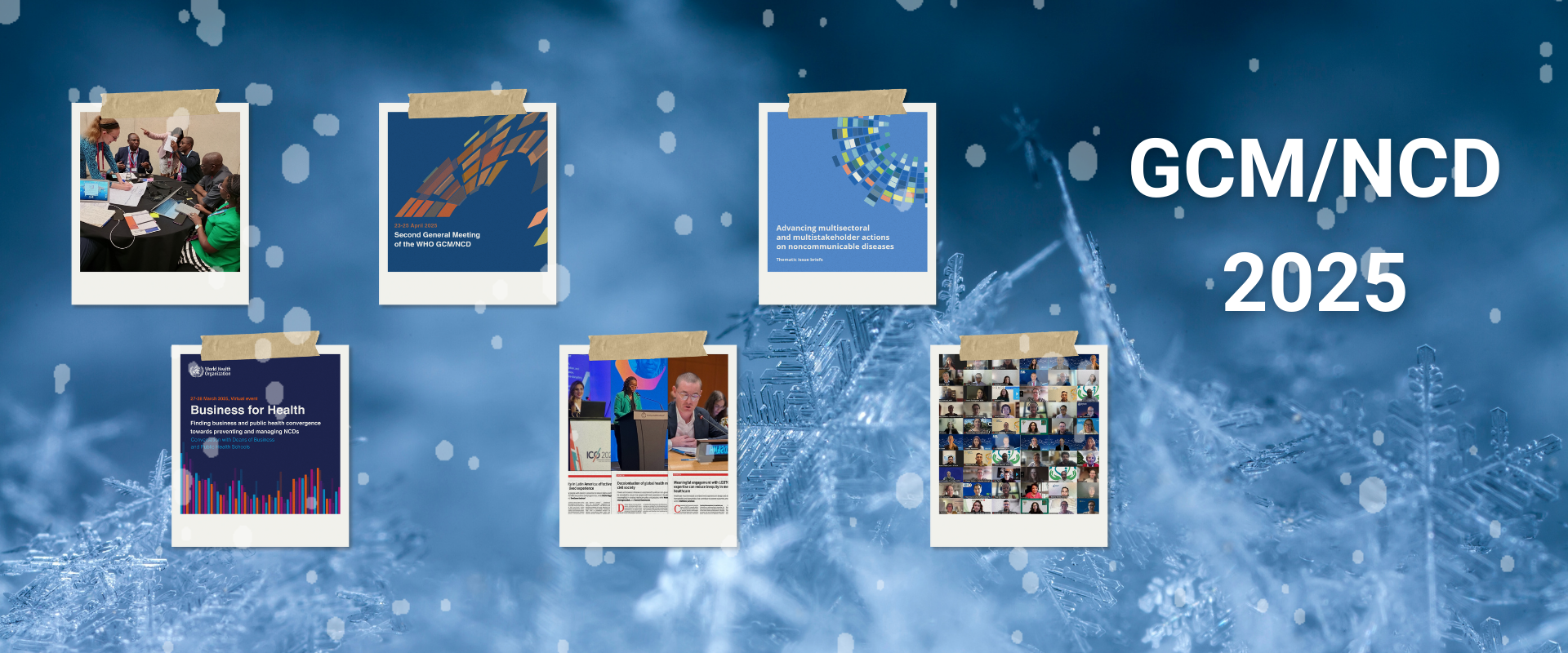
2025 was a challenging year for global health. For the Global Coordination Mechanism on NCDs (GCM/NCD), it was a year of adapting and strengthening partnerships and activities, and of inspiring and meaningful engagement with countries, people and communities. Here are some of the highlights of how the GCM/NCDs worked to advance multistakeholder and multisectoral action on noncommunicable diseases (NCDs) this year.
On the sidelines of the 4th Global NCD Alliance Forum in Kigali, Rwanda, the GCM/NCD co-hosted a two-day capacity-sharing workshop on scaling promising NCD interventions through public sector support. Twenty-five participants, including government officials and representatives of community organizations discussed enablers and barriers to scaling grassroots innovations with technical experts.
During the NCD Alliance forum, the WHO Symposium on Meaningful Engagement also launched its new advocacy messages on Meaningful Engagement of People Living with NCDs, Mental Health, and Neurological Conditions.
At the first WHO dialogue on business and public health convergence, deans, directors and senior faculty of business and public health schools met with business leaders and global health experts to examine how research, education and leadership that can transform the economic, commercial, environmental and social determinants of noncommunicable diseases (NCDs).
In late April, the Second General Meeting of the Global Coordination Mechanism on NCDs (GCM/NCD) convened Member States, civil society actors and partners to put forward recommendations on accelerating multisectoral and multistakeholder responses to NCDs and mental health conditions. More than 300 participants from over 50 countries were part of the meeting, which marked one of several major milestones on the road to 2025 and the Fourth High-level Meeting of the United Nations General Assembly on NCDs (HLM4).
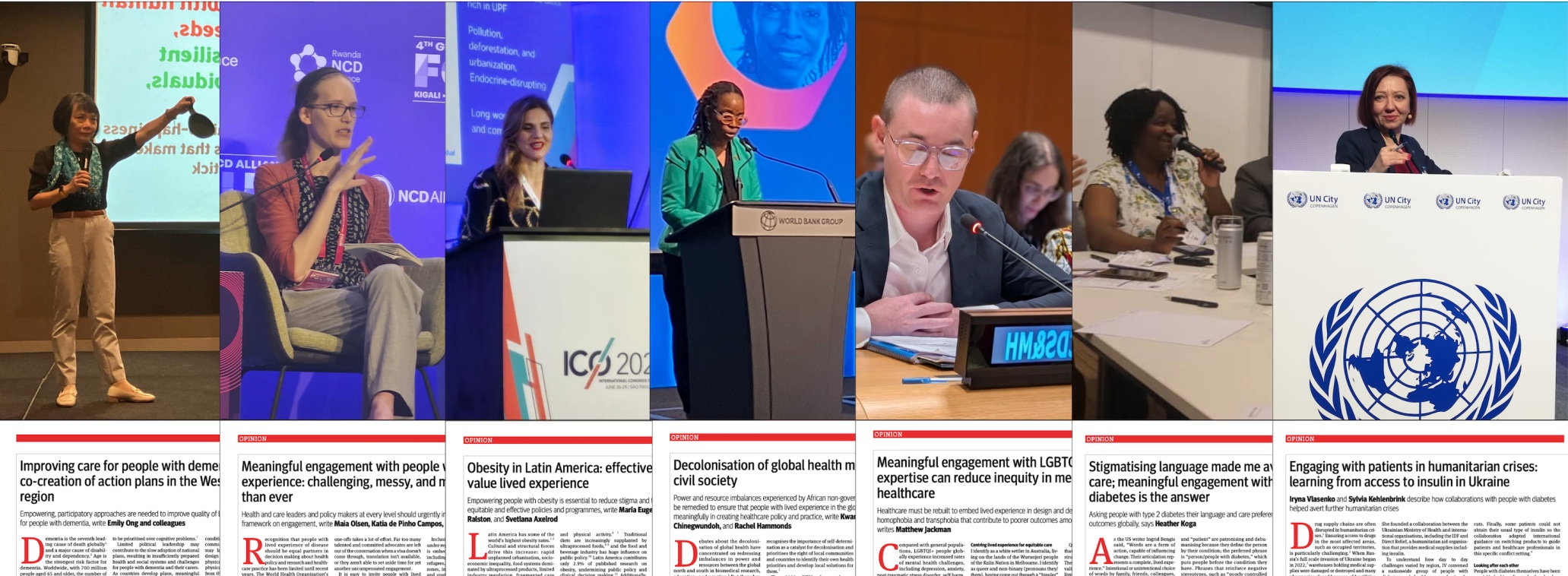
The British Medical Journal (BMJ) launched a new series titled “Lived Experience as Expertise” which was co-developed with World Health Organization’s Global Coordination Mechanisms on Noncommunicable diseases (WHO GCM/NCD).
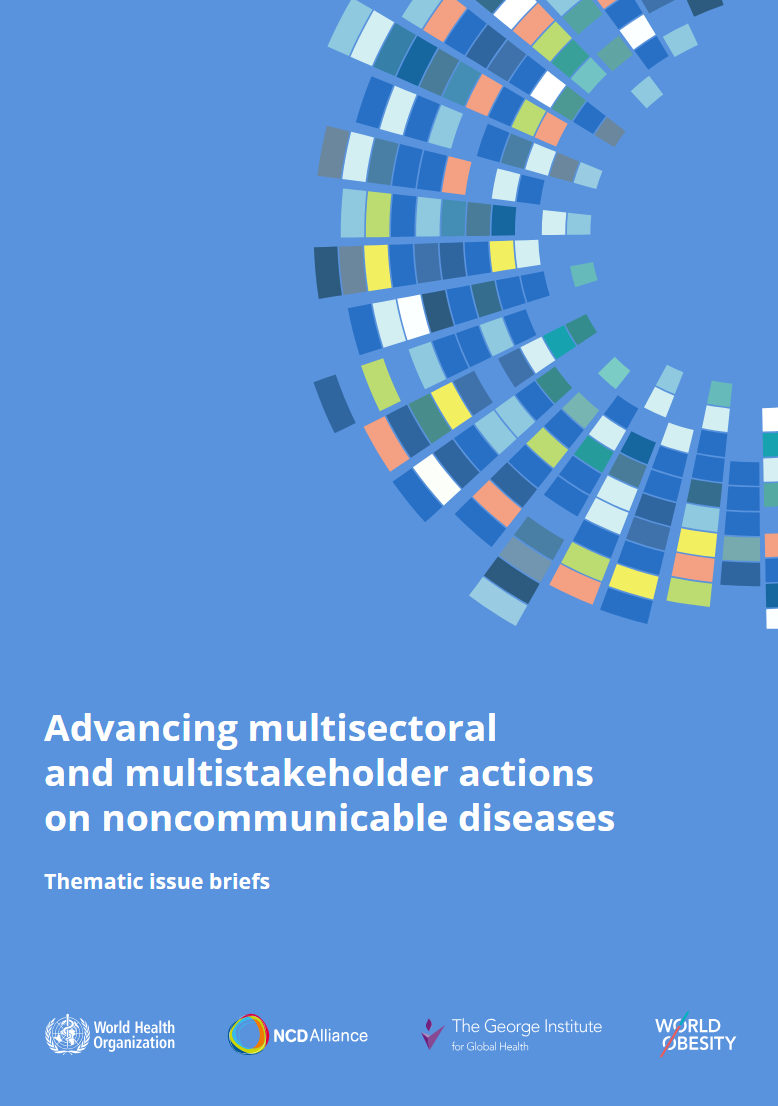
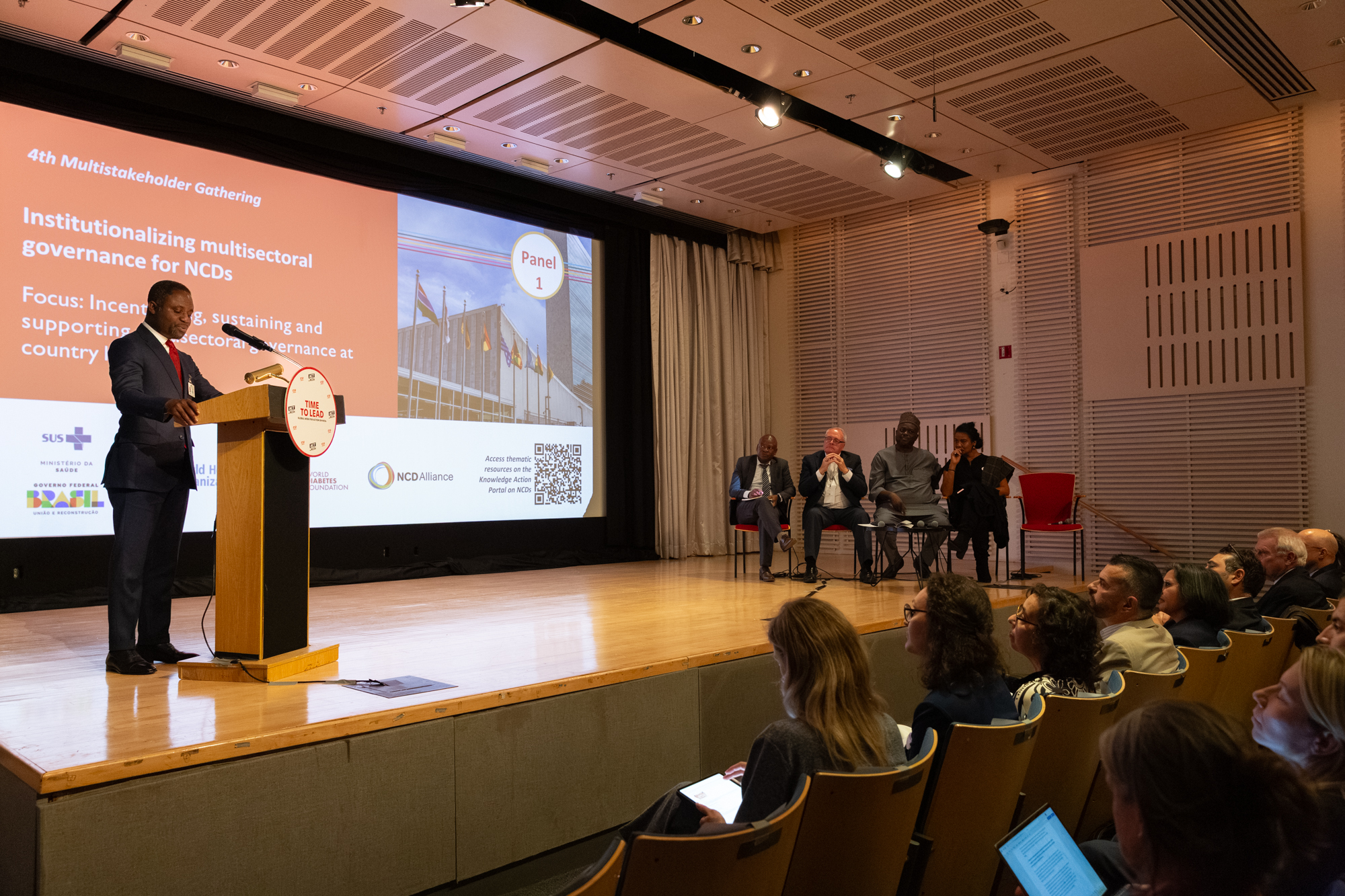
Co-developed with GCM Participant organizations and under jont leadership with the NCD Alliance, The George Institute for Global Health and the World Obesity Federation, the thematic issue briefs discuss three urgent aspects required to drive multisectoral governance and actions: (i) Institutionalizing multisectoral governance for sustainable collaboration on NCDs; (ii) Advancing data-driven, evidence-informed multisectoral action, and (iii) Building multisectoral narratives for coherent government-wide leadership in the NCD response. The publication was officially launched at the Fourth Multistakeholder Gathering in New York, co-organised by WHO GCM/NCD, the NCD Alliance and the World Diabetes Foundation, and co-sponsored by the Ministry of Health of Brazil.
The first in a new series of GCM Participant Gatherings virtually brought together more than 150 participants representing 50 civil society organizations and lived experience advocates. The discussion focused on maintaining momentum and prioritizing implementation following the UN High-level Meeting on NCDs and Mental Health, with particular attention to equity and inclusion across the life course, responding to the major risk factors and systemic determinants of health, addressing physical and mental health issues in an integrated way, and addressing challenges across sectors and settings.

Civil Society Working Group
26 May 2026
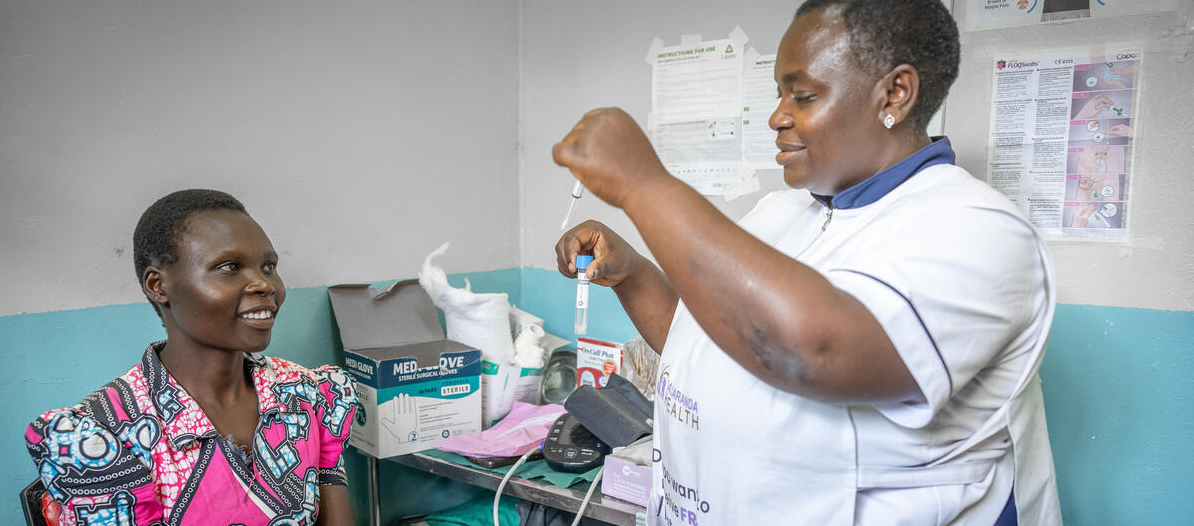
Meaningful Engagement of People with Lived Experiences
30 Mar 2026

Health Literacy Development
05 Mar 2026

Multistakeholder Collaboration
10 Feb 2026
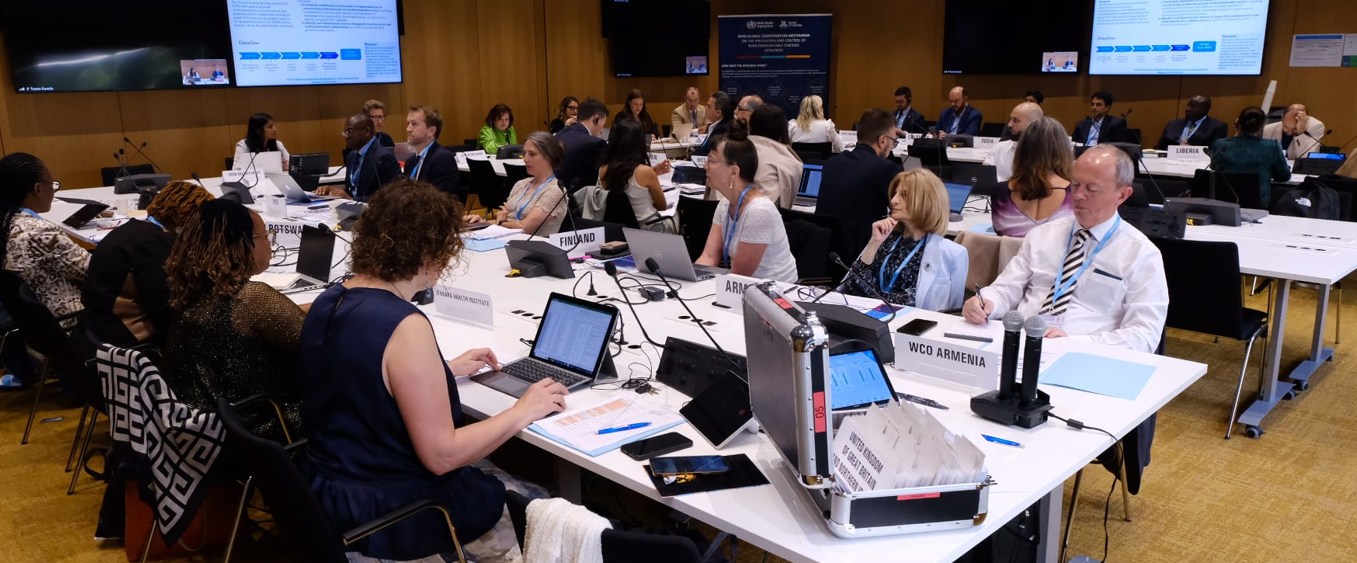
Multistakeholder Collaboration
29 Jan 2026
Meaningful Engagement of People with Lived Experiences
09 Apr 2025