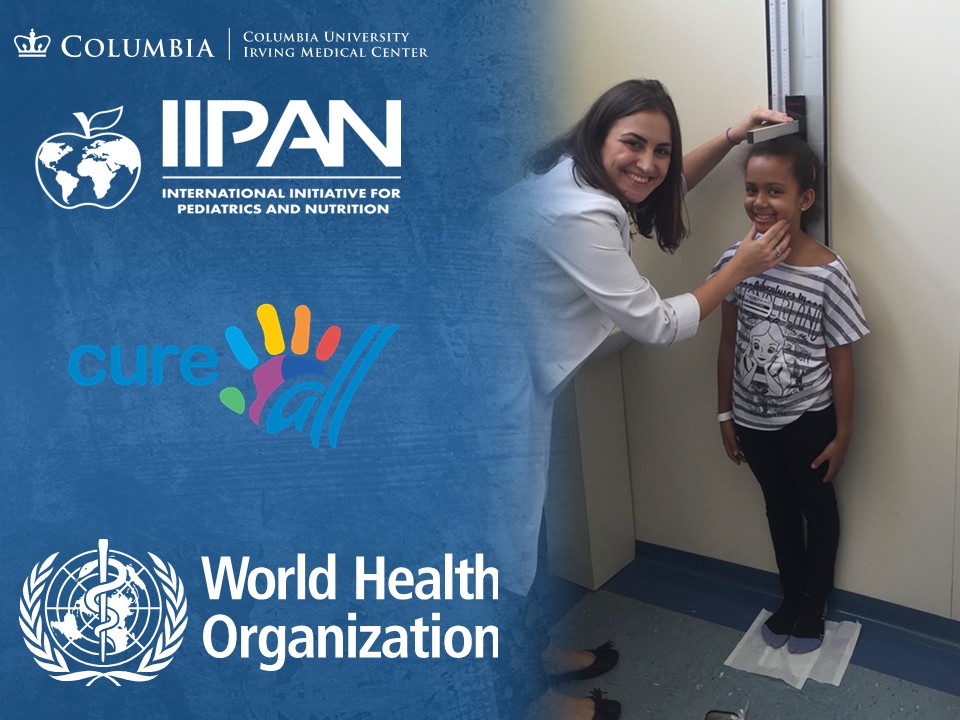
A thematic collection by: Roberta Ortiz Sequeira, WHO

Sharing Best Practices and Country Success Stories in Clinical Nutrition Care for Children with Cancer

We are pleased to share a curated set of best practice documents and country success stories highlighting effective clinical nutrition care interventions that have improved outcomes for children with cancer across diverse settings.


These materials are made available to the community through a collaboration between the World Health Organization (WHO) and the International Initiative on Paediatrics and Nutrition (IIPAN) at Columbia University. This partnership brings together global leadership in child health and extensive expertise in nutrition science and clinical care to support the integration of quality nutrition services within paediatric oncology.

Through shared learning, practical tools, and real-world implementation examples, these resources are designed to support multidisciplinary teams in embedding clinical nutrition into routine cancer care, reducing treatment-related complications, improving treatment tolerance, and ultimately enhancing survival and quality of life for children.
Read more Share


<!-- THEME DEBUG -->
<!-- THEME HOOK: 'field' -->
<!-- FILE NAME SUGGESTIONS:
   ▪️ field--node--title--pin.html.twig
   ✅ field--node--title.html.twig
   ▪️ field--node--pin.html.twig
   ▪️ field--title.html.twig
   ▪️ field--string.html.twig
   ▪️ field.html.twig
-->
<!-- 💡 BEGIN CUSTOM TEMPLATE OUTPUT from 'themes/custom/whokap/templates/field/field--node--title.html.twig' -->
A Framework for Adapted Nutritional Therapy for Children With Cancer in Low- and Middle-Income Countries: A Report From the SIOP PODC Nutrition Working Group
<!-- END CUSTOM TEMPLATE OUTPUT from 'themes/custom/whokap/templates/field/field--node--title.html.twig' -->

Wiley Online Library: Pediatric Blood and Cancer

A Framework for Adapted Nutritional Therapy for Children With Cancer in Low- and Middle-Income Countries: A Report From the SIOP PODC Nutrition Working Group

Publication

27 Sep 2024


<!-- THEME DEBUG -->
<!-- THEME HOOK: 'field' -->
<!-- FILE NAME SUGGESTIONS:
   ▪️ field--node--title--pin.html.twig
   ✅ field--node--title.html.twig
   ▪️ field--node--pin.html.twig
   ▪️ field--title.html.twig
   ▪️ field--string.html.twig
   ▪️ field.html.twig
-->
<!-- 💡 BEGIN CUSTOM TEMPLATE OUTPUT from 'themes/custom/whokap/templates/field/field--node--title.html.twig' -->
ICONIC: An international task force supporting collaboration in nutrition and cancer globally
<!-- END CUSTOM TEMPLATE OUTPUT from 'themes/custom/whokap/templates/field/field--node--title.html.twig' -->

Science Direct: Trends in Food Science & Technology

ICONIC: An international task force supporting collaboration in nutrition and cancer globally

Publication

15 Aug 2022


<!-- THEME DEBUG -->
<!-- THEME HOOK: 'field' -->
<!-- FILE NAME SUGGESTIONS:
   ▪️ field--node--title--pin.html.twig
   ✅ field--node--title.html.twig
   ▪️ field--node--pin.html.twig
   ▪️ field--title.html.twig
   ▪️ field--string.html.twig
   ▪️ field.html.twig
-->
<!-- 💡 BEGIN CUSTOM TEMPLATE OUTPUT from 'themes/custom/whokap/templates/field/field--node--title.html.twig' -->
Nutritional Care Guide for Pediatric Cancer
<!-- END CUSTOM TEMPLATE OUTPUT from 'themes/custom/whokap/templates/field/field--node--title.html.twig' -->

PAN American Health Organization (PAHO)

Nutritional Care Guide for Pediatric Cancer

Guide

15 Aug 2023

About

Across Uganda, Ethiopia, and the Philippines, multidisciplinary teams are using practical tools, locally adapted recipes, and structured nutrition care to reduce complications, strengthen treatment tolerance, and improve quality of life for children with cancer.


These case studies showcase scalable, affordable models that are already transforming care in resource-constrained settings.

KAP thematic collections are created, managed, and updated by individual platform users. Collection content, featured resources and image material are subject to the KAP community guidelines and the copyright code of conduct. Featuring resources and information in collections does not imply that they are endorsed or recommended by the KAP or the World Health Organization.