
A thematic collection by: Kamara Daniel, Bwindi Community Hospital

Kamara Daniel, Receiving the Award.
Credits
From Bwindi to a National Stage
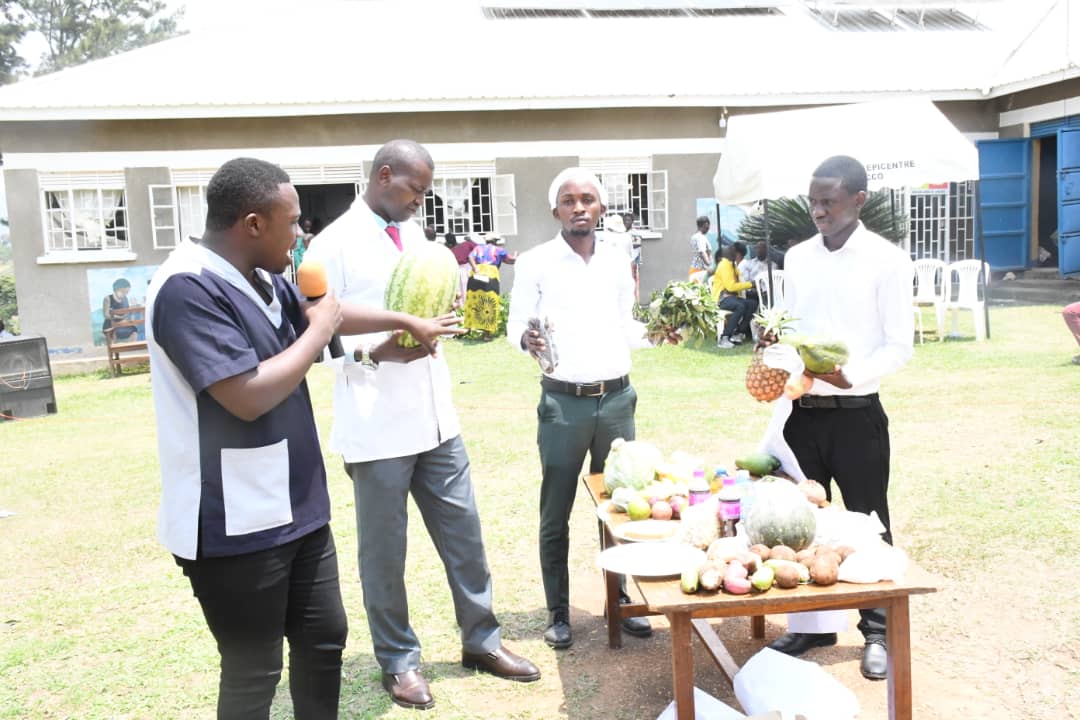
A practising nutritionist at Bwindi Community Hospital and Nutrition Rehabilitation Centre, and an active member of the Uganda Diaspora Allied Health Professionals (UK), Kamara Daniel has spent time building practical, people-centered nutrition work. He has led widely followed public campaigns the 90 Days of Zero Sugar Challenge,50 Days Fruits and Vegetable Campaign, Meal Timing Campaign, Portion Control Campaign, Hydration Week and the 14 Days of Diabetes Activism turning evidence-based advice into simple habits that Ugandans can adopt immediately.
Daniel’s work stretches from bedside clinical rehabilitation to national advocacy. He has created scalable campaigns and accessible content that demystify healthy eating for urban and rural audiences alike. His social media platforms which have grown into a powerful public-education channel translate clinical guidance into everyday language, inspiring thousands to make small changes with big health payoffs.
Championing Integration: Nutrition as a Core Health Service
What sets Daniel apart is his insistence on integration. He has consistently pushed for nutrition to be embedded in maternal and child health services, chronic-disease clinics, community outreach and agricultural programming not siloed in specialty clinics. Working closely with the Ministry of Health and multidisciplinary partners, he has championed joint planning, cross-sector budgeting and routine nutrition education and counselling as standard practice.
This integrated approach has two immediate benefits: better patient outcomes and a stronger, more flexible workforce. When nurses, community health workers and clinicians receive basic nutrition training and work alongside nutritionists, care becomes more holistic and preventive catching problems earlier and reducing strain on acute services.
World Health Organization
Nutrition Landscape Information System (NLIS) country profile indicators
Publication
17 Oct 2018
Campaigns That Move People and Policy
Daniel’s public campaigns do more than raise awareness; they change behaviour. The Zero Sugar Challenge encouraged people to cut out refined sugar for 90 days, while Hydration Week focused attention on simple but critical habits like drinking clean water and replacing sugary beverages. The 14 Days of Diabetes Activism blended screening, nutrition advice and community talks to make prevention tangible.
By linking grassroots campaigns to policy conversations and clinical practice, Daniel has created a model where public engagement and system-level change reinforce each other. That model is particularly valuable for Uganda and for other countries facing rising rates of malnutrition and diet-related non-communicable diseases.
A Role Model for the Future Health Workforce
Kamara Daniel’s award sends a clear message to the next generation of health workers: nutrition matters. For young Professionals and allied health professionals, his career maps out a pathway that blends clinical expertise, community outreach, digital literacy and policy engagement. He mentors junior nutritionists, trains multidisciplinary teams and speaks regularly at conferences and workshops building capacity that will outlast any single campaign.
The future health workforce needs leaders who can bridge disciplines. Daniel’s work illustrates how nutritionists can be catalysts collaborating with clinicians, Doctors, agricultural officers, educators and policy-makers to design interventions that are affordable, culturally relevant and scalable. In doing so, he helps create health professionals who are versatile, prevention-minded and community-rooted.
Why This Recognition Matters Globally
Honouring a nutritionist at a national level health awards ceremony is more than national pride it’s a statement about global health priorities. As countries worldwide grapple with the triple burden of malnutrition and rising communicable and non-communicable chronic diseases, elevating nutrition within health system leadership sends a practical signal: invest in prevention, train the workforce, and make healthy choices easier for everyone.
Daniel’s example is replicable. Simple, evidence-based campaigns; routine nutrition counselling in primary care; and cross-sector partnerships can be adapted in low- and middle-income settings everywhere. His award amplifies the idea that strengthening nutrition services is a high-return investment for public health.
A Call to Action
Kamara Daniel’s achievement is inspiring, but it should also prompt action. Governments, donors and institutions must invest in nutrition training for the entire workforce, fund community programmes that change behaviour, and support nutritionists who can translate research into practice. Schools of health should include practical nutrition competencies, and ministries should continue mainstreaming nutrition into every health program.
Closing: A New Chapter for Health
Kamara Daniel stands at the intersection of clinical care, public education and policy advocacy. Being named Outstanding Nutritionist of the Year 2025 is recognition of his achievements and an invitation to accelerate the future. If the last several years show us anything, it’s that small, consistent changes in diet and service delivery produce outsized gains in population health. With leaders like Daniel, Uganda and the world has a clearer roadmap for building a health workforce that prevents disease as effectively as it treats it.
Kamara Daniel’s story is more than an individual triumph. It’s a blueprint: put nutrition at the front, train a multidisciplinary workforce, and empower communities and we will build healthier nations together.
World Health Organization
Global nutrition policy review: What does it take to scale up nutrition action?
Report
17 Oct 2018
Additional resources
About
On Friday, November 14, at Kololo during the Africa Health Summit, Uganda celebrated a milestone: Kamara Daniel was named Outstanding Nutritionist of the Year 2025 at the 6th Heroes in Health Awards the first time this category has been honoured since the awards’ inception. More than a trophy, Daniel’s recognition signals a shift in how health systems, communities and future health workers will view nutrition: not as an afterthought, but as the foundation of modern, resilient care.
KAP thematic collections are created, managed, and updated by individual platform users. Collection content, featured resources and image material are subject to the KAP community guidelines and the copyright code of conduct. Featuring resources and information in collections does not imply that they are endorsed or recommended by the KAP or the World Health Organization.