The burden of Noncommunicable diseases (NCDs) has been progressively growing in Nepal. NCDs such as heart disease, stroke, cancer, diabetes, and chronic lung disease, are responsible for almost 70% of all deaths globally (WHO). Tobacco use, physical inactivity, the harmful use of alcohol and unhealthy diets are the major identified risk factors for NCDs. It was estimated that a total of 193,331 deaths in 2019 in Nepal, of which 71.1 % of deaths were due to NCDs (STEP Survey 2019). Various community-based interventions for health promotion and primary prevention are essential to combat NCDs in Nepal. Community based interventions have significant impacts on the NCD prevention, screening, and early diagnosis. The prevalence of overweight and obesity in Nepal is 22.2%, with significantly higher rates observed among women aged 40–49 years, The prevalence of Overweight and obesity in reproductive-age women has nearly tripled from 9% in the last ten years in Nepal.
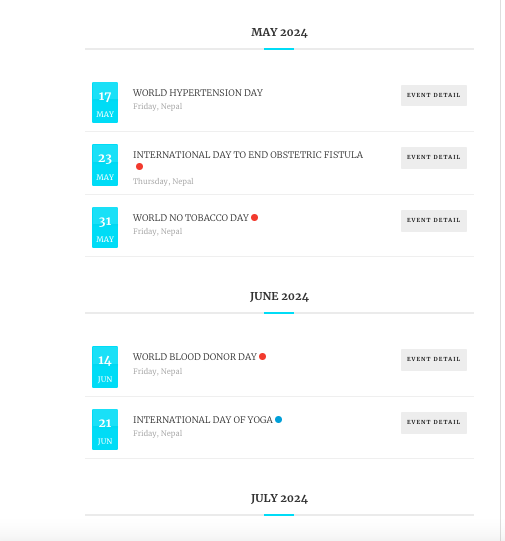
In Nepal, as in many low-resource settings, women face substantial barriers in accessing timely, adequate, and affordable healthcare. Often, families prioritize the healthcare needs of children and men over those of women, who are usually the primary caregivers. Travel time and costs further discourage women from accessing health services, as they prioritize household responsibilities. Women with low socioeconomic status in Nepal are at a higher risk of exposure to non-communicable disease (NCD) risk factors due to gender norms. Additionally, women and girls are less likely to receive adequate education compared to men, limiting their capacity to protect themselves from other NCD risk factors, including unhealthy diets, air pollution, tobacco, and alcohol use. In Nepal, addressing the issue of NCDs requires comprehensive health education and awareness campaigns. Implementing educational programs to raise awareness about the risk factors associated with NCDs, such as unhealthy diets, physical inactivity, and tobacco use is crucial. Developing preventive measures tailored to address the specific needs of vulnerable groups, such as widow/separated women, Dalit women, and reproductive-age women, is also essential. Our mobile app will contribute to raising awareness and spreading accurate health information to all Nepalese through a calendar-based approach. By providing the right health information to everyone, we aim to enhance health-related behaviors or perceptions of community people especially women and girls on NCD prevention and treatment. Use of digital technology in the health sector is rapidly expanding, with people increasingly relying on the internet and mobile phones for information. In this technological era, high-quality digitized health platforms and mobile applications are essential for increasing self-awareness and reducing the burden of NCDs. Our initiative aims to introduce a user-friendly calendar-based mobile app to inform, educate, and engage Nepali people, particularly women and girls, to prevent NCDs, promote health, and prolong lives. The Public Health Calendar integrates the concept of a calendar into health interventions, providing daily information on health conditions, such as sugar on Sunday, meals on Monday, and weight on Wednesday, to raise awareness and sensitize people about health and well-being.
Use of digital technology in the health sector is rapidly expanding, with people increasingly relying on the internet and mobile phones for information. In this technological era, high-quality digitized health platforms and mobile applications are essential for increasing self-awareness and reducing the burden of NCDs. Our initiative aims to introduce a user-friendly calendar-based mobile app to inform, educate, and engage Nepali people, particularly women and girls, to prevent NCDs, promote health, and prolong lives. The Public Health Calendar integrates the concept of a calendar into health interventions, providing daily information on health conditions, such as sugar on Sunday, meals on Monday, and weight on Wednesday, to raise awareness and sensitize people about health and well-being. Objectives: The primary objective of our project is to implement calendar-based interventions for the prevention and management of Noncommunicable Diseases (NCDs) in Nepal. Specific objectives are; - To promote healthy consumption of foods and dietary intake among populations at risk for NCDs. - To provide information to the people for the prevention of NCDs (CVD, Cancer, Diabetes), and motivate behavioral change through a mobile app. - To guide local healthcare providers to provide policy and guideline updates to strengthen their capacity for screening NCDs and early diagnosis. - To conduct Implementation Research on use of mobile app for NCD prevention and treatment in Nepal. The target population includes Nepali people, with a special focus on women and girls. The project will initially be implemented in Aadhikhola Rural Municipality, Syangja, and later scaled up nationwide. The scope of the project includes: Population: Nepali people, with a special focus on women and girls. Location: Aadhikhola Rural Municipality, Syangja (initial phase). Later, the project will be scaled up nationwide.
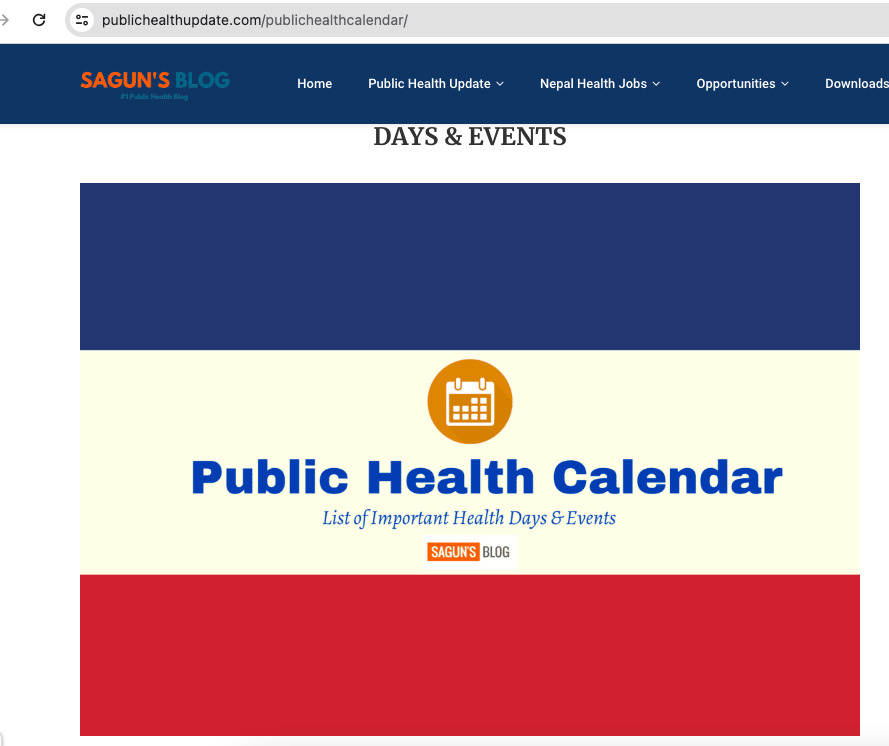
Public Health Calendar will utilize the simple functions and techniques via mobile application and the website, so this is very practical and feasible intervention to enhance the knowledge of community peoples in a NCD prevention, treatment and other contemporary health issue.
https://publichealthupdate.com
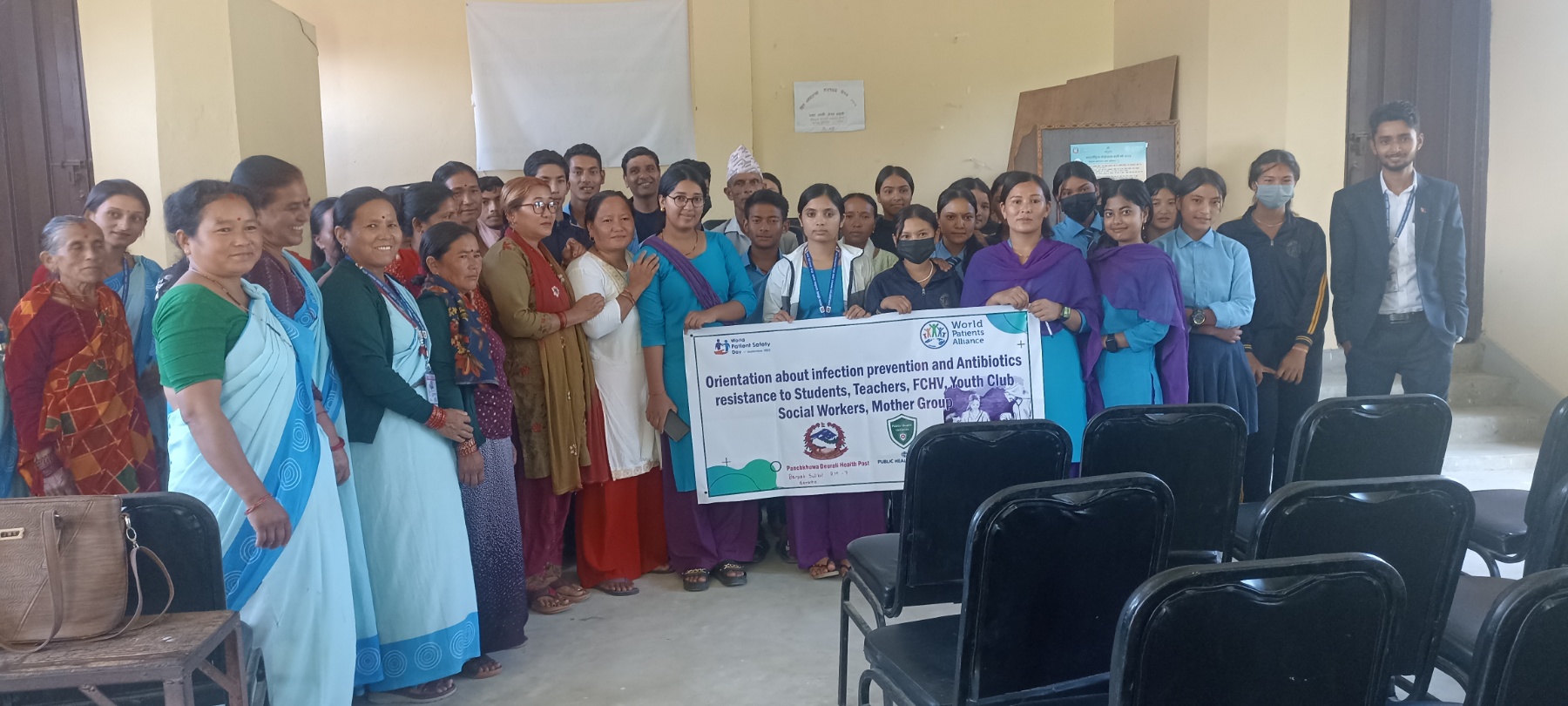
Initiate the intervention from Aadhikhola Rural Municipality, Syangja, and later scale up nationwide. Engage various stakeholders such as local community leaders, Female Community Health Volunteers, School teachers, Students, Mother groups, and Health mother groups in the local community.
The primary objective of our project is to implement calendar-based interventions for the prevention and management of Noncommunicable Diseases (NCDs) in Nepal. Specific objectives are;
- To promote healthy consumption of foods and dietary intake among populations at risk for NCDs.
- To provide information to the people for the prevention of NCDs (CVD, Cancer, Diabetes), and motivate behavioral change through a mobile app.
- To guide local healthcare providers to provide policy and guideline updates to strengthen their capacity for screening NCDs and early diagnosis.
- To conduct Implementation Research on use of mobile app for NCD prevention and treatment in Nepal.
The target population includes Nepali people, with a special focus on women and girls. The project will initially be implemented in Aadhikhola Rural Municipality, Syangja, and later scaled up nationwide. The scope of the project includes:
Population: Nepali people, with a special focus on women and girls.
Location: Aadhikhola Rural Municipality, Syangja (initial phase). Later, the project will be scaled up nationwide.
Key Result Areas:
1. Increased Awareness: The Public Health Calendar will significantly increase awareness about health conditions among Nepali people, especially women and girls.
2. Improved Health Behaviors: The initiative aims to successfully influence positive lifestyle changes.
3. Prevention of NCDs: By providing targeted information, the app will contribute to the prevention of non-communicable diseases (NCDs).
4. Women Empowerment: Empower women and girls through increased health literacy.
5. Accessibility: Making health information easily accessible to a wide audience, including those in remote areas.
6. Community Engagement: Foster community engagement by promoting health discussions and encouraging people to share health-related information within their communities.
7. Long-term Health Benefits and Public Health Impact: Promoting preventive measures and healthy lifestyles, contributing to a healthier population and reducing the burden of NCDs in Nepal.
8. Contribution to Achieving SDG 5: Support the Government of Nepal's efforts towards achieving gender equality and empower all women and girls by providing NCDs related information via the mobile application.
Features and key interventions
The Public Health Mentor Calendar application will have following features;
- Basic calendar features (International and local calendar, holidays information, date and other essential information for day-to-day use): to increase the utilization of our digital tool.
- NCDs SBC/IEC messaging system
- Medicine reminder and alert services for chronic diseases patients.
- Notification for weight measurement
- BMI calculator, and obesity tracking features.
- Syntax based NCDs related SMS alert services
- Push notification and reminders for health education and behavioral change communication on obesity, cardiovascular diseases and other information.
- Chat, asking a question, comments, and answer
- Read health news published by verified news portals.
- Enquiries, FAQs related to health and alert services.
- Creating a profile and customization of the app as per the areas of interest and diseases eg diabetes, hypertension etc.
- Emergency health service information
- Health facility search services
- Ambulance directory and contact details.
- Diseases alert system, outbreak news, national campaigns e.g.; vaccination schedule,
- Public health alerts.
- Enquiries, FAQs related to health and alert services.
- Doctor and paramedics search options.
The methodology includes: 1. Development of Mobile Application and Web Portal: Develop a mobile application and web portal based on scientific evidence and best practices in health communication and behavior change. 2. Design key messages, behavioral change messages, and NCD information in consultation with the Government of Nepal, Ministry of Health and Population, and the National Health Education, Information, and Communication Center (NHEICC). 3. Launch of App: Implement interventions following a calendar-based approach on a daily basis, providing daily health tips, reminders, and educational content. 4. Research, Utilization and Monitoring and Impact Assessment: Assess the utilization of the mobile app through monitoring the app use and user engagement. 5. Conduct Implementation research to explore the benefits and potential of the interventions. Continuously monitor and evaluate the effectiveness and impact of the interventions. 6. Community Engagement: Initiate the intervention from Aadhikhola Rural Municipality, Syangja, and later scale up nationwide. Engage various stakeholders such as local community leaders, Female Community Health Volunteers, School teachers, Students, Mother groups, and Health mother groups in the local community. Multiple studies indicate that mobile application-based interventions have been crucial in disease prevention in Nepal. Using mobile SMS as an effective, acceptable, and appropriate health intervention has shown improvement in dengue prevention practices within communities. This approach can be adopted as a promising tool for health education against dengue and other diseases. The NepaDengue application has been identified as a promising tool for dengue prevention and control in Nepal. Further piloting and implementation of the app in the community setting are recommended.
Our project's theory of change is based on an Input-Process-Output model and Behavior Change Theory, which outlines the strategic approach for the project aimed at addressing the rising burden of Noncommunicable Diseases (NCDs) in Nepal. Inputs: 1) Development of Mobile Application: A user-friendly mobile application and web portal will be developed, providing key messages, behavioral change messages, and NCD information. 2) Implementation of Calendar-Based Interventions: - Promote healthy consumption of foods and dietary intake among populations at risk for NCDs. - Provide counseling for the prevention of NCDs (CVD, Cancer, Diabetes) and motivate behavioral change through the mobile app. 3) Community Engagement: - Implement the intervention in close collaboration with local communities such as schools and health facilities. - Engage stakeholders such as local community leaders, Female Community Health Volunteers, School teachers, Students, Mother groups, and Health mother groups in the local community. Outputs: - A user-friendly mobile application and web portal with accurate health information and behavioral change messages will be fully developed and implemented. Outcomes: - Accessibility: Health information will be easily accessible to a wide audience, including those in remote areas, bridging the gap in health education and awareness. - Increased Awareness: The Public Health Calendar will significantly increase awareness about health conditions among the Nepali people, especially women and girls. - Improved Health Behaviors: Positive lifestyle changes, such as adopting healthier habits and making informed choices regarding diet, exercise, and overall health, will be observed. - Prevention of NCDs: Targeted information provided through the app will contribute to the prevention of non-communicable diseases (NCDs). Users will be better equipped to manage their health, reducing the risk of NCDs. - Women Empowerment: Women and girls will be empowered through increased health literacy, enabling them to make health-related decisions for themselves and their families. Impact: Reduced burden of NCDs in Nepal
Monitoring Indicators: App and Web Portal Utilization: - Number of downloads and installations of the mobile application. - Number of daily active users. - Frequency of access to the web portal. - Number of key messages, behavioral change messages, and NCD information accessed. - Rate of adoption of newly acquired skills. Implementation of Calendar-Based Interventions: - Percentage of the target population reached with health education and awareness programs. - Number of counseling sessions conducted. - Adherence to the calendar-based approach. - Community Engagement: - Level of engagement with local community leaders, Female Community Health Volunteers, School teachers, Students, Mother groups, and Health mother groups in the local community. - Number of community events conducted. Regular Data Collection: - Collect data on app and web portal utilization, SMS send and delivered. - Community engagement activities on a weekly and monthly basis. Review meeting: - Conduct regular review meetings with local municipality (Aadhikhola Rural Municipality) to assess the progress of the project, identify challenges, and make necessary adjustments.
Project Milestones and Timelines: 1. Implementation designing Phase (October- December 2024: - Finalize the project plan, including objectives, strategies, and methodologies. - Develop the detailed project proposal and submit it for approval. - Recruit and hire the project team, including project manager, monitoring officer, and evaluation officer. - Develop the mobile application and web portal. - Conduct a stakeholder meeting to present the project plan and receive feedback. 2. Implementation Phase (January– December 2025) - Launch the mobile application and web portal. - Begin the calendar-based interventions for NCD prevention and management. - Initiate community engagement activities in Aadhikhola Rural Municipality, Syangja. - Conduct baseline surveys to assess the current status of NCDs, health behaviors, and awareness among the target population. 3. Evaluation phase (January- Febuary 2026) - Conduct the evaluation to assess the project's progress and effectiveness. - Analyze the data collected from the surveys and monitoring process to evaluate the project's effectiveness. - Conduct focus group discussions (FGDs) and key informant interviews (KIIs) to gather qualitative data on the project's outcomes and impacts. - Develop case studies to illustrate the project's success stories and challenges faced. - Share the final project report with the stakeholders, including the Government of Nepal, Ministry of Health and Population, and the National Health Education, Information, and Communication Center (NHEICC). - Publish research articles. 4. Continuation Phase
Estimated budget. - Project Planning and Development with local government: $2000 - Development of Mobile Application and Web Portal: $10,000 - Stakeholder Meeting and Training Sessions: $1,000 - HR for daily operation of Mobile Application, message designing: $15000 - Baseline research and regular monitoring and data Collection: $5,000 - Final Evaluation with Implementation research: $7,000 - Total cost: $40,000 (USD)
https://drive.google.com/file/d/1j8Tzjv5_tQs9b2iywOrjngCJgzurZwfI/view?usp=sharing